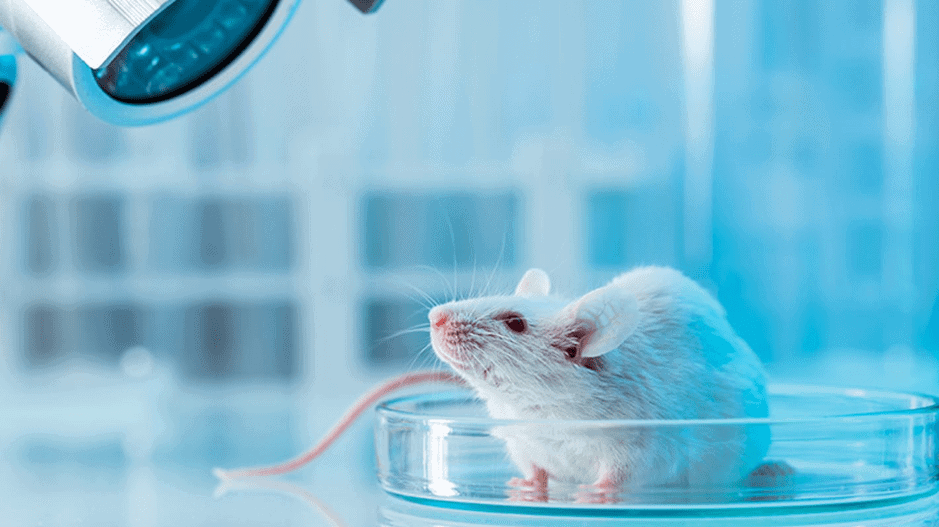
People have varying sentiments for animals. Some consider them
companions while others take them as a means of accentuating their research.
Using animals for the sake of research has been a heated debate topic for
decades.

So, let’s consider what’s wrong
with animal experimentation? We wonder if there is any right to these procedures.
Poisoning, burning, shocking, and mutilating animals is a norm in vivo
testing.
According to research, over 26 million animals are used as mere
samples every year in the U.S. Certainly; vivisectors might have strong reasons
for doing so but, when we peek deep into it, the consequences of Vivo testing
cannot be overlooked.
Five reasons why animal testing should
ban worldwide:
Now let’s have a quick rundown of why we believe animal testing
should be banned worldwide:
1.Violation of animal rights:
Animals and human beings are alike in several ways; they both
can feel, behave, think, and experience pain. Hence, animals have a fundamental
moral right to respectful treatment, just like human beings.
The general public tends to believe that the animals who serve
as research samples are kept under decent conditions. However, that isn’t
always the case, and some of the experimentation itself is cruel to the
animals.
When a human being participates in any research, they need to
sign a consent form. On the contrary, when animals are used for
life-threatening experiments, there is no concept of informed consent.
Scientists say it is because animals are not knowledgeable enough like humans;
they don’t know what consent is.
The complete ignorance regarding animal consent is pure
exploitation of animal rights. Just because they are not knowledgeable about
consent, it doesn’t give humans the right to do as they please with animals.
One could argue that in light of certain mental conditions, people may not be aware
of the concept of consent. Does that give other people the right to do as they
please? Clearly not! Hence, animals also deserve to be treated with the same
level of respect as humans.
2. Animal testing is archaic:
At some point in time, humans might have needed animals to
survive, but after evolving so much, this should not be the case anymore. If we
are still using the same methods of cruelty to test consumer products or find
cures to diseases, then we are either too lazy or too cruel to innovate. Animal
testing belongs to the wrong side of history, and everybody should play a part
in ending it.

3. Animal testing is wasteful and costly:
In the past, animal experimentation might have led to some
breakthroughs. However, in today’s world, when the questions asked by society
and science are more complex, it is just an inadequate and outdated
methodology. It produces nothing but invalid and misleading results.
In vivo testing uses approximately 115 million animals every
year globally, and only 59 new medicines were approved by authorities in the
year 2018. The U.S. drug industry invests $50 billion every year in research,
and the approval rate for new medication is just as same as it was 50 years
ago.
Animals do not get heart diseases like cancer, Parkinson’s, or
schizophrenia, so the experiments performed on them are often ineffective.
Moreover, animal testing takes months, years, and can cost hundreds of
thousands of dollars to provide results. It’s a very time consuming and costly
process.
Fortunately, many alternatives to animal testing
are available now, which require less money and also help reduce the number of
animals being massacred in the name of human welfare.
4. Inaccurate test results:
Will scientists ever use human beings to experiment cures for
animal diseases? So why not apply the same logic to animal
experimentation?
According to an essay on animal testing, there is only a
5%-25% chance of an agreement between human and animal test results. 90% of
times a drug that passes animal tests fail miserably in first trials on human
subjects.
Moreover, animals suffer from severe side effects after
ingesting the various drugs and chemicals, 75% of which never occur in human
beings. Humans and animals differ way too much anatomically, so inaccurate
results will always be the fate of scientists who don’t stop substituting
animals for human beings.

5. Availability of decent alternatives:
Society might have allowed animal testing as a ‘necessary evil’
after being convinced that there is no other way to find cures for human
diseases or make drugs and cosmetic products safe. Yet the truth is animal
testing is cruel and costly, and with the advancement of science and
technology, decent alternatives to animal testing are now available.
Instead of using animals as their test subjects, cosmetic
companies can use synthetic cellular tissue that resembles human skin to test
their products. Another great invention is a product called ‘Eyetex’; this
synthetic material replicates a real eye and turns opaque when a product
damages it.
‘In vitro testing’ is another excellent auxiliary to animal
experimentation, in which cellular tests take place inside a test tube. ‘Organs
on chips’ is an innovative little device that helps scientists study the human
biological system, drug metabolism, and diseases.
Many other devices and methods are evolving to eliminate animal
testing as a whole. You can also check essays from top
dissertation writing companies in this regard to know more about
decent alternatives to animal testing.
Conclusion:
Millions of animals, including dogs, cats, rats, mice, rabbits,
pigs, and many others, are sacrificed
in the name of scientific research. It really is a genuine tragedy that
makes it crucial to understand that the choice is not between humans and
animals, but it is between good science and bad science. Thus, concluding it to
the point that animal testing should be comprehensively banned because it
violates fundamental animal rights and causes nothing but pain and
suffering.